From detection to remediation.
One of us filed the security tickets. One of us closed them. We started Emphere so the fix arrives before the ticket does.

From detection to remediation.
One of us filed the security tickets. One of us closed them. We started Emphere so the fix arrives before the ticket does.
Detection is a solved business. Remediation isn't.
The Problem
Your backlog moves in sprints. Attackers move in hours.
By the time a finding is triaged, prioritized, ticketed, and scheduled into a sprint, the exploit already exists. Attackers turn a disclosure into working code in days, sometimes hours.
Vulnerability management assumed you had weeks to decide what to fix and what to accept. That window is gone. There is nothing left to manage. There is only fixed or not fixed, and accepted risk is just not fixed with a signature on it.
.svg)
.svg)
Founded by the two sides of the same broken handoff.
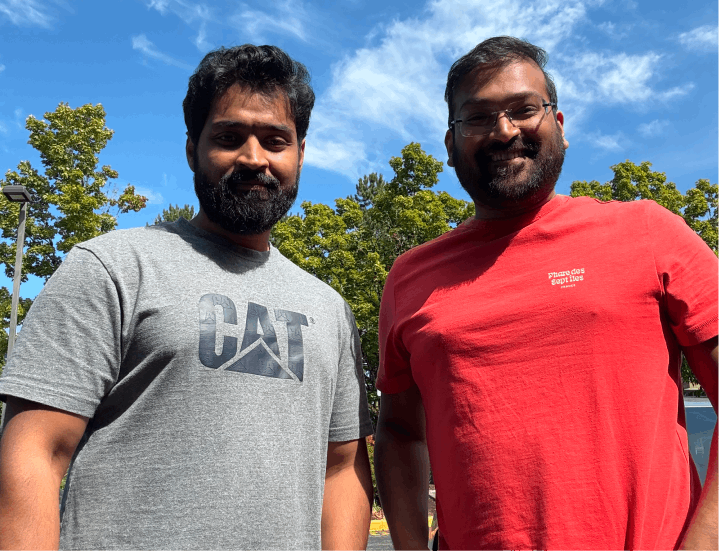
Pallav and Ankit met as roommates at Northeastern University and spent the next decade working the same problem from opposite ends. Pallav built large-scale systems at CarGurus and Twitter, watching security tickets consume engineering cycles that were never budgeted for them. Ankit spent six years at Uber securing cloud infrastructure across Uber and every company it acquired, opening the tickets Pallav was trying to close, at global scale.
Between them, they'd seen both sides of a handoff the industry had accepted as friction. They founded Emphere to eliminate it — not by improving the process, but by automating past it.

A decade in cybersecurity, six years of it at Uber securing cloud infrastructure across Uber and its acquired companies. He's seen vulnerability management operate at global scale, and seen exactly how much of that work never reaches resolution.

Software engineer who spent his career building large-scale systems at CarGurus and Twitter. He knows intimately what it costs an engineering team to absorb a security backlog: in velocity, in morale, and in the work that never got built.
Go to market
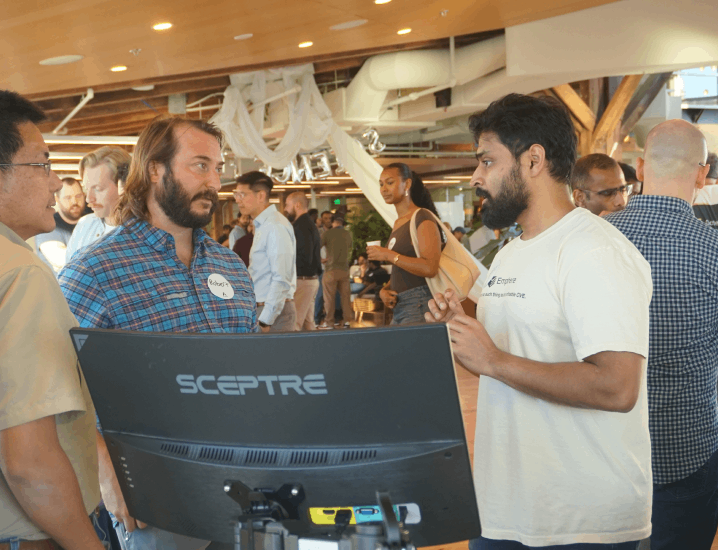
Emphere sells to two teams at once: the security lead who needs the risk closed and the platform engineer who needs nothing to break. Go to market at Emphere means talking to both, and never overselling to either.

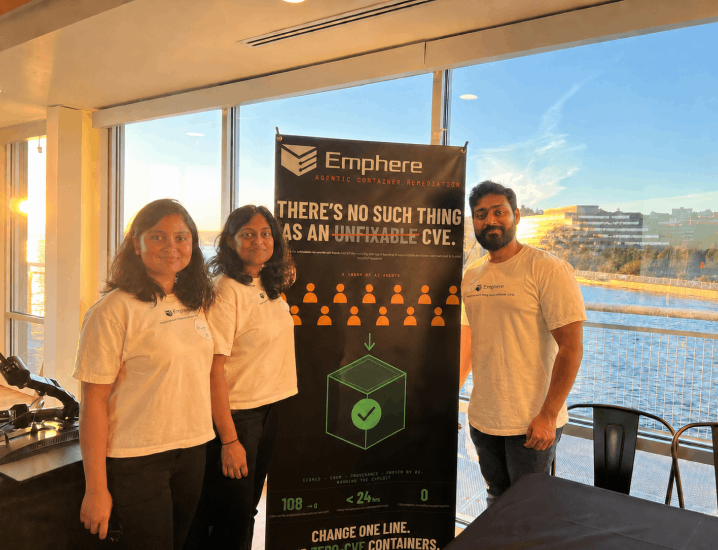
Leads go-to-market at Emphere, driving pipeline development, strategic partnerships, and outreach. She aligns product capabilities with market needs, helping enterprise engineering and security teams.
Let's talk pricing.
Tell us about your environment and we'll put together a quote.
What every image gets
- Every open source CVE fixed, including won't fix and end of life
- Exploit tested and compatibility tested before it comes back
- Signed, with SBOM and SLSA provenance attached
- Zero-agents, zero footprint in production
- Managed base layers, continuously rebuilt from source
Pricing based on unique container images scanned.
Volume discounts available.
Get a custom quote
We'll respond within one business day.
FAQ

.svg)

.svg)
.svg)