Backed by

Outpatch
AI attacks.
Remediate every CVE in open source software, fixable or unfixable. Ship container images with no accepted risks.
Every image. Every release.
0 CVEs
every release
24 hours
from disclosure to patched
~30%
eng hours saved per week
48 hrs
to first clean image
There's no such thing as an unfixable CVE.
Faster remediation
When there's no upstream fix, we backport, craft, or bridge one. Won't-fix and end-of-life packages come back reading zero.

Agents work every CVE in parallel, no ticket queue
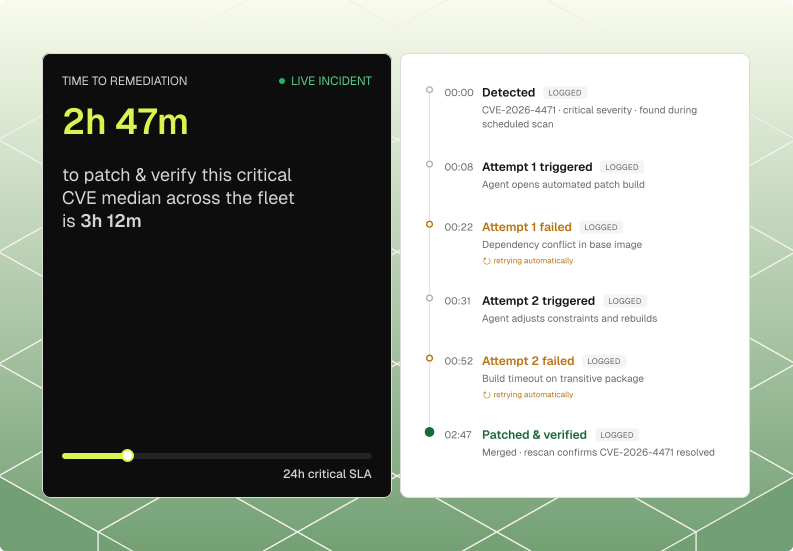
Criticals and highs targeted within 24 hours
Failed patch attempts retry automatically until the fix holds
Validated replacements
Every patched package clears a security gate and a compatibility gate before it enters your image. A failed gate holds the build.
Security gate: the working exploit rerun against the patched image
Compatibility gate: functional, integration, and runtime tests
Every rebuild retested, not just the first one
Proof for every fix
Every fix returns with the evidence attached. You hand it to an auditor instead of defending a claim.
Before and after exploit verdicts, per CVE
SBOM in CycloneDX and SPDX, reachability embedded
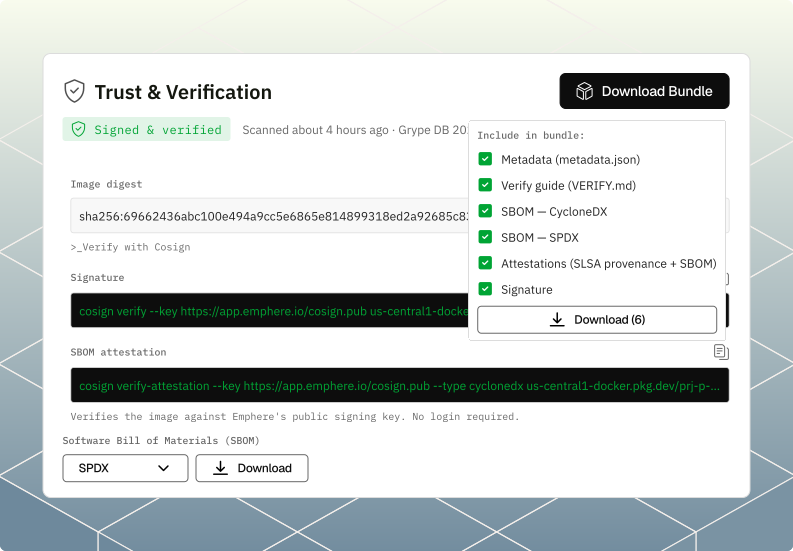
Cosign signature and SLSA provenance, verifiable without an Emphere login
The same container. A completely different security outcome.
Emphere rebuilds the vulnerable parts and hands back the same image. Here's the difference, side by side.
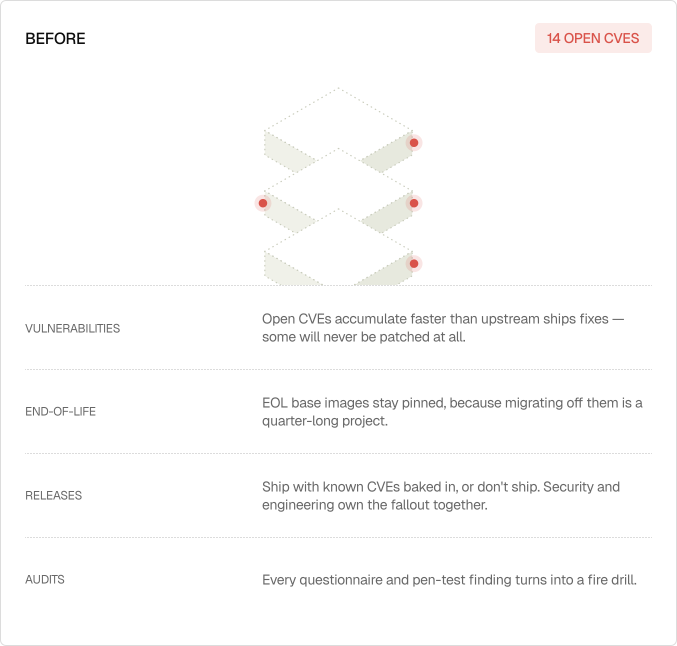

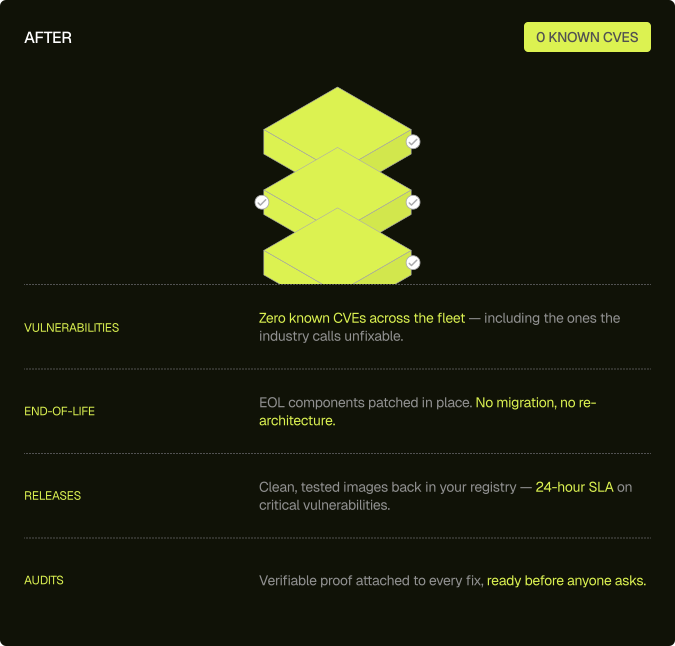
Your Dockerfile in. Zero CVEs out.
01
Register your Dockerfiles
02
Decompose the image
03
Fix or disarm
04
Validate the result
05
Stay at zero
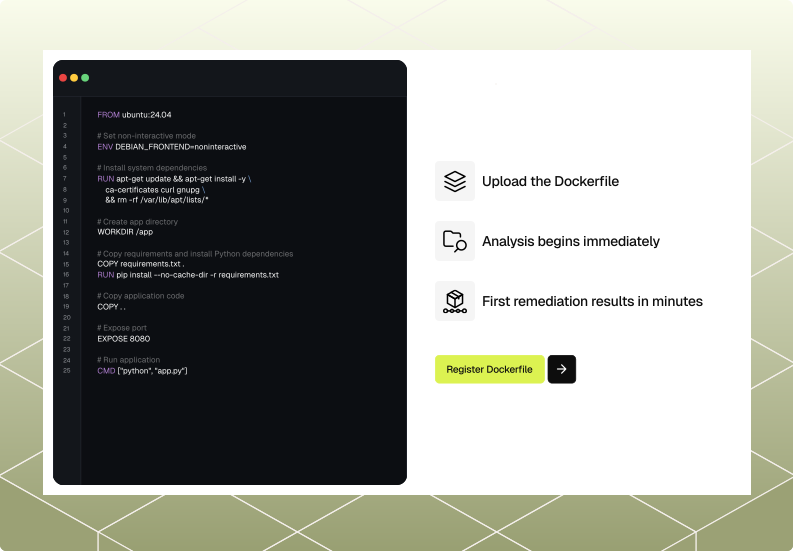
Your Dockerfile is the only input
Emphere works from the Dockerfile your team already builds from. Your application workflow, registry, scanners, and CI/CD pipeline all remain exactly as they are.
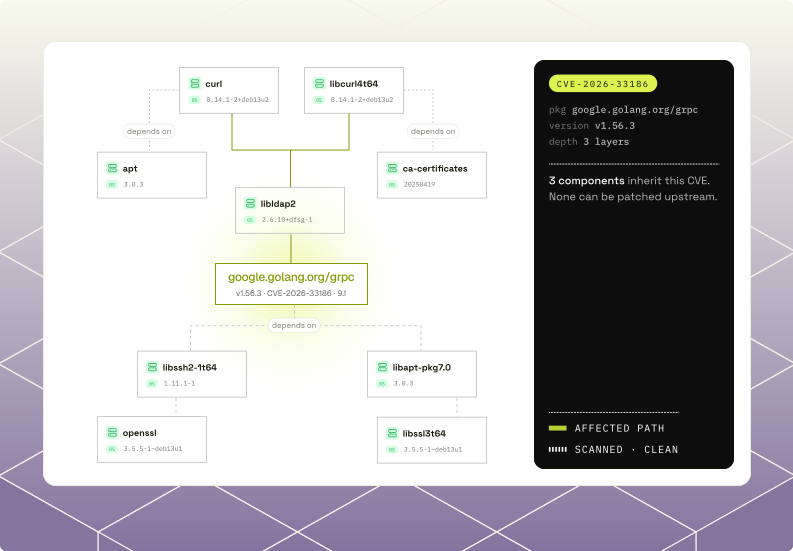
Every dependency resolved to the symbol level
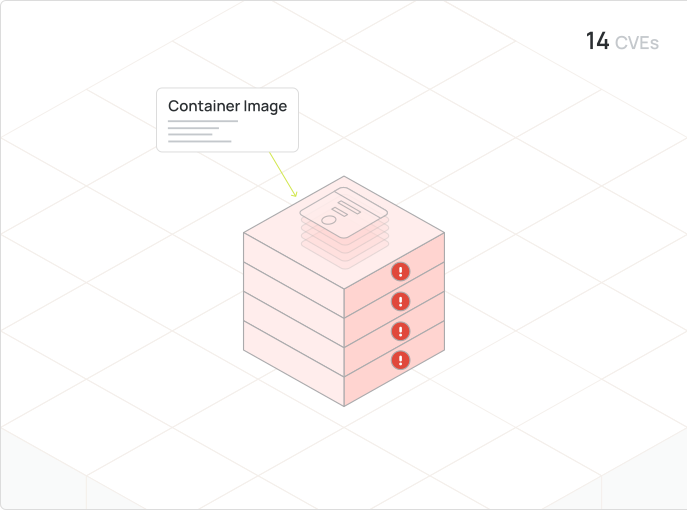
Emphere separates the image into base OS, runtimes, libraries, and application code, then maps how every component depends on the rest. Before anything changes, Emphere knows which CVEs actually reach your application and what a fix will touch.
No patch? We create one.
When an official patch exists, Emphere applies it at the source and rebuilds. When none exists, Emphere writes its own and maintains it, for zero days, end of life packages, and the findings scanners flag but nobody fixes. Every Emphere patch holds until an official fix ships. If one never does, Emphere keeps maintaining it.
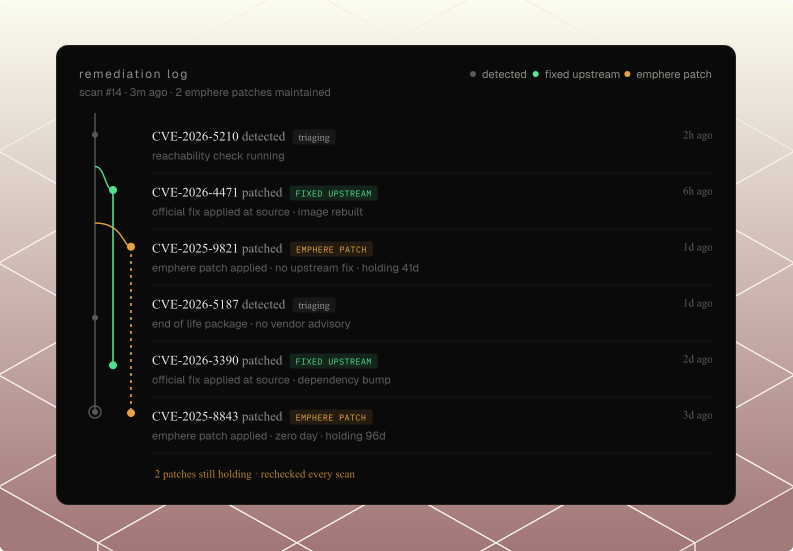
Verify every change yourself
Every image returns signed, compatibility tested, and scanner ready, with SBOM, SLSA provenance, and before and after scan evidence. Verification runs with Cosign against Emphere's public key. No Emphere login required.
Your image stays at zero
The Dockerfile becomes a supply chain Emphere monitors and rebuilds as new vulnerabilities land. Median time to exploit is now under five days, and the window keeps shrinking. Remediation runs on SLAs built to beat it.
The AI remediation
engine for every open-
source CVE.










Agents remediate it. You deploy it. Nothing breaks.
You are not adopting a tool. You are handing off a job. Agents take the CVE backlog, you take back a signed image that runs, and the only change to your week is the engineering hours you get back.
Step 01
Nothing changes on your side.
Point Emphere at the Dockerfile your team already builds from. No migration, no rearchitecture, no new registry. Same pipeline, same base image, same team.
Step 02
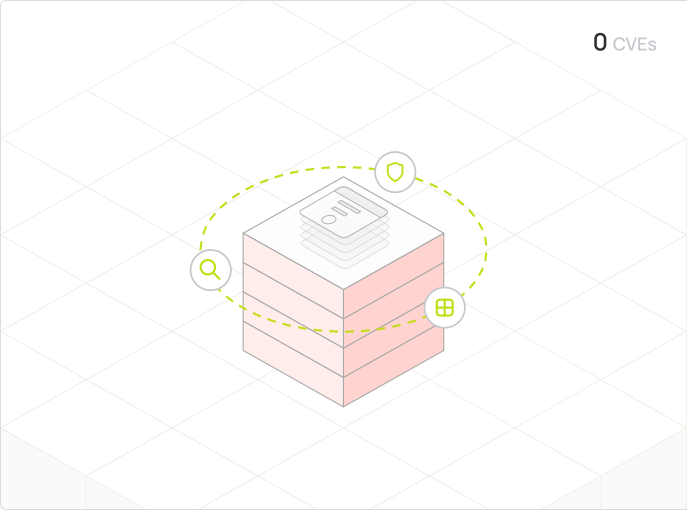
Agents remediate every layer
Agents work everything under your code at once. Base OS, runtimes, and the open source libraries your application depends on. Where an upstream fix exists they apply it at the source. Where none exists they write one.
Step 03
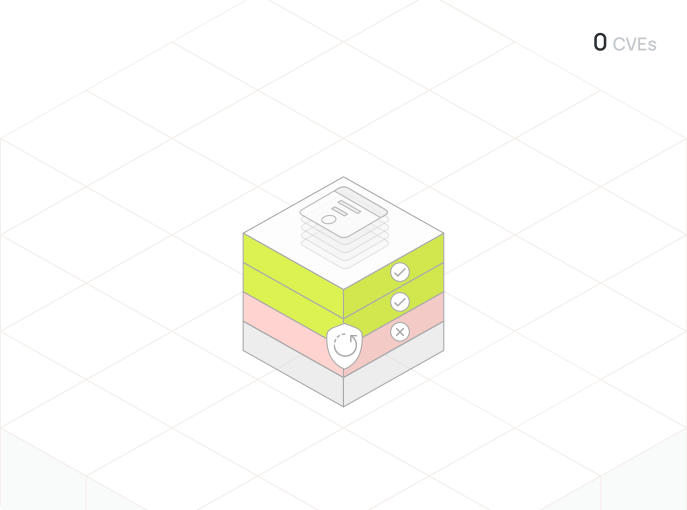
Exploited before. Exploited after.
Agents reproduce the exploit against the original image, then run the same exploit against the rebuilt image to confirm it fails. Functional, integration, and runtime tests confirm nothing else changed. You see both results before you deploy.

Step 04
Deploy it. It just runs.
You get back a drop in image, signed, with SBOM and provenance attached. Push it and your scanner reads zero. Your customer's scanner reads zero. Nothing else changes.
Step 01
Nothing changes on your side.
Point Emphere at the Dockerfile your team already builds from. No migration, no rearchitecture, no new registry. Same pipeline, same base image, same team.
Step 02
Agents remediate every layer
Agents work everything under your code at once. Base OS, runtimes, and the open source libraries your application depends on. Where an upstream fix exists they apply it at the source. Where none exists they write one.
Step 03
Exploited before. Exploited after.
Agents reproduce the exploit against the original image, then run the same exploit against the rebuilt image to confirm it fails. Functional, integration, and runtime tests confirm nothing else changed. You see both results before you deploy.
Step 04
Deploy it. It just runs.
You get back a drop in image, signed, with SBOM and provenance attached. Push it and your scanner reads zero. Your customer's scanner reads zero. Nothing else changes.
For security and engineering.
Security needs the risk closed. Engineering needs the workflow preserved. Emphere gives both teams a clean, verifiable result without creating another migration project.

Software vendors
For software, infrastructure, data, security, and developer-tool companies that ship containerized products to enterprise customers.
A customer scan that flags vulnerabilities can delay a deployment, block a sale, hold up a renewal, or create another urgent engineering request. Emphere returns a clean image with evidence the customer can verify through its own tools.
Primary teams
Regulated enterprises
For financial services, healthcare, pharmaceuticals, fintech, government-adjacent, and other regulated organizations operating complex container environments.
Emphere reduces remediation backlogs, recurring patch work, audit pressure, and the risk of rushed security updates breaking production.
Primary teams



“We had to ship images with CVEs built in because fixes weren’t available. For RabbitMQ alone, we spent 1–2 days per release and still couldn’t fix them all.”
— Shivam Uniyal, TestMu AI

1-2 days
Faster response time per release
Zero CVEs
In production across developer containers
100s of CVEs
Handled automatically and at scale